
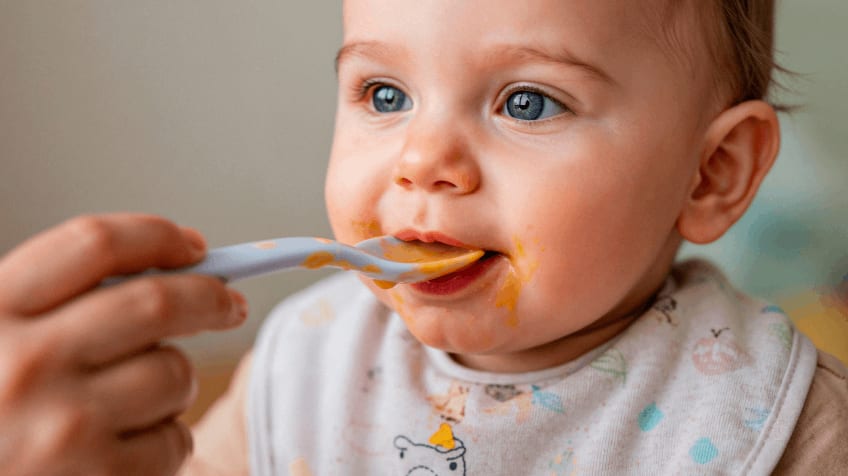
Introducing solid foods to your baby is one of the most important milestones in their growth journey. To help parents understand this transition better, Dr. Ganesh Badge, Consultant Pediatric Intensivist at Sahyadri Hospital, Hadapsar – Momstory Pune, explains everything you need to know about complementary feeding. If you’re seeking reliable guidance from the best child specialist in Pune or the best pediatrician in Pune, this comprehensive guide will help you start right.
What Is Complementary Feeding?
Earlier, the term weaning was used, but it has now been replaced with complementary feeding because breastfeeding is recommended up to 2 years.
Complementary feeding simply means adding solid foods to a baby’s diet along with mother’s milk.
Around 6 months of age, breast milk alone cannot meet the baby’s increasing nutritional requirements. Therefore, solid foods are introduced to provide additional calories and nutrients.
When Should You Start Complementary Feeding?
Complementary feeding should begin after the baby completes 6 months.
At this stage:
-
Neck holding is achieved
-
The baby can sit with support
-
Digestive enzymes are adequately developed
-
The body is ready to handle new textures and tastes
Parents often misunderstand common behaviors like spitting or pushing food out with the tongue as dislike. But this is normal, it simply indicates the baby is learning to swallow.
What Foods Should You Start With?
Begin with balanced, simple, easily digestible foods.
Dr. Ganesh Badge recommends introducing:
One cereal + one pulse (protein + carbohydrate)
Examples:
-
Rice + moong dal
-
Wheat porridge
-
Ragi mixed with dal
Start with morning feeds, introducing one new food per week. This helps you observe digestion, tolerance, and any allergic reactions.
Gradually increase the quantity based on acceptance.
How Much Food Should You Give?
-
Between 6–9 months, use a 250 ml bowl.
Begin with 1/3rd of the bowl, 2–3 servings per day. -
After 9 months, increase both quantity and feeding frequency.
To make meals energy-dense, you can add:
-
Ghee
-
Vegetable oils
These help meet the child’s growing calorie needs.
Foods You Can Introduce Gradually
-
Mashed fruits (banana, chikoo, papaya)
-
Pulpy fruits
-
Curd/yogurt
-
Soft home-cooked foods like mashed idli, mashed dosa, khichdi
Foods You Should Avoid
To ensure proper nutrition and digestion, strictly avoid:
-
Packaged or processed foods
-
Biscuits
-
Cakes
-
Foods high in salt, sugar, or fat
-
Junk food
-
Ready-made mixes
Cleanliness is extremely important. Always use clean hands and clean utensils to prevent infections.
Breastfeeding and Water Intake
-
Continue breastfeeding up to 2 years, along with solids.
-
After 6 months, you may start offering small sips of water.
However, breast milk already contains a high amount of water, so only minimal additional water is needed initially.
Breast milk continues to play a crucial role in brain development and immunity.
When Should You Consult a Pediatrician?
If you’re confused, concerned, or want personalized guidance, make sure to visit your doctor. Consulting the best child specialist in Pune or the best pediatrician in Pune ensures safe and healthy feeding practices for your baby.
Final Thoughts
Complementary feeding is a gradual, exciting journey for both parents and babies. Starting right, choosing nutritious foods, and maintaining hygiene will help your baby transition smoothly.
For more expert guidance, you can visit Sahyadri Hospital, Hadapsar – Momstory Pune and consult Dr. Ganesh Badge.